





Water


|
Content review required
This article has been deemed to require a review of it's content.
|
|---|
Water and Sewage are optional features and are only available when Water Management is enabled in game settings.
Background
Drinking water is a crucial resource that is obtained and processed to ensure its safety for consumption. Water is typically sourced from natural reservoirs such as lakes, rivers, and underground aquifers. It is collected using various methods, such as intake systems that prevent debris from entering the supply.
After collection, water goes through a treatment process to remove impurities and make it safe to drink. This process includes filtration, disinfection, and sometimes additional steps like coagulation and flocculation. Filtration removes suspended particles and sediment, while disinfection eliminates harmful microorganisms. The specific treatment methods may vary depending on the source and quality of the water.
Once treated, the drinking water is transported to homes, buildings, and communities through a network of pipes. Water pressure plays a vital role in ensuring a steady flow of water. In many urban areas, water is delivered using pressurized systems, where water is pumped and maintained at a certain pressure to reach higher elevations and distant locations. This enables efficient distribution of water to different areas.
In some cases, gravity-fed water systems are utilized, especially in rural or mountainous regions. Gravity-fed systems rely on the force of gravity to supply water. Water sources located at higher elevations are tapped and channeled through pipes downhill to the communities. The gravitational force ensures a continuous flow of water without the need for pumps or external energy.
Storing drinking water is crucial to meet fluctuating demands and provide a backup during emergencies. Reservoirs, tanks, and water towers are commonly used to store water. These structures not only store a sufficient quantity of water but also provide the necessary pressure for distribution.
Overall, the process of obtaining, processing, and distributing drinking water involves a combination of treatment techniques, infrastructure, and consideration of water pressure to ensure a safe and reliable water supply for communities.
Gameplay
Water management is a setting in the game settings which the player can enable. When enabled the player needs to take care of providing water to the citizens and factories. To achieve this the player needs to build buildings to collect and distribute water and also to take care over the quality of the water when providing it to citizens.
General
Water retrieval
Water can be retrieved from a lake or river with the help of a surface water outflow. If there is no river or lake nearby the player can get water from a water well.
Water for citizens
The water from a surface water outflow or from a water well is drinkable for citizens but the player pays a health penalty depending on the quality of the water. When water is of bad quality the citizens will become sick and must go see a doctor in a hospital. Water treatment allows the player to control the water quality and this water is more suitable for the citizens in the republic.
Water for factories
Factories need water and drinking water for the workers who work at the factory. The food processing factories must be provided with high quality drinking water.
Water quality
The quality of the water is influenced by the environment. Water quality of a surface water outflow depends on the water quality in the river or lake. When a water well is placed near buildings, the water quality is reduced. The water quality from a water well is 95% at maximum, because the water well itself reduces the quality. The player can control the quality of water with the help of water treatment. In water treatment, the water is treated with chemicals to become water of a higher quality, with a maximum of 99%. Citizens need high quality water as drinking water, if they get water with a quality lower than 97% they will become sick and must go see a doctor.
Notes
- Water imported from a customs house has a quality of 99%.
- The minimum drinking water quality for citizens is 97%.
- A water quality of 95% will affect some citizens, 75% a lot more. Water quality that is consistently at 95% will still be enough to affect overall health.
Distribution
Water needs to be distributed throughout the republic for buildings to function. This can be done through small, medium, big water pipes or with a water truck. Big water pipes can transport more water over longer distances. Medium water pipes can transport less water, and small water pipes transport the least. The player can branch off water pipes using water switches. Contrary to the name, water switches cannot switch on or off water, and are only an interconnection between water pipes.
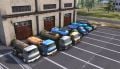
When using a water truck the player must use a water loading/unloading station, water treatment plant or customs house to be able to load water. The water trucks must be stationed at a technical services building and the source of water must be assigned. A water loading/unloading station has multiple water connections for pipes of any size. A water treatment plant can provide any treated water to trucks. A customs house will sell water on demand. Trucks will automatically deliver to buildings or a water substation if they are inside the set range of the technical service.
Water can be distributed to buildings using a water substation. The player connects one water pipe, of any size, to a water substation. How far away a water substation can be placed from a building depends on the terrain height in the environment. If the water substation is at a higher height than the building, the distance increases. If the water substation is at a lower height the distance is decreased. The larger the difference in height between water substation and building the more the distance is increased or decreased. This rule applies to all 'sources' of water (water substation, water well, etc.) and 'consumers' (factories, stores, housing, etc.).
With help of a water pumping station the player can pump water from a lower height to a higher height. When pumping water to a higher height, the throughput of the pump is decreased, e.g. less m3/hour water pumped by the pump. When pumping water to a lower height, the throughput of the pump is increased, e.g. more m3/hour water pumped by the pump. Pumps have limited throughput. A small water pump transfers a maximum of approximately 50 m3/hour and a large pump transfers a maximum of approximately 150 m3/hour. The actual numbers can vary depending on height difference.
Water can be stored in a water tower or in a water underground reservoir.
Water Pressure
Pipes can transport more water depending on the water pressure. 1 bar of water pressure will transport about 19% of a pipe's total capacity. Pipes reach maximum throughput (the number displayed on the tooltip) when the pressure is at least 5.3 bar. Pumps will automatically raise the pressure to 5.3 bar, but their throughput is limited as described above. For example, a small pump cannot fully saturate a large pipe; it will only transport 50 m3/hour.
Exact water pressure is affected by the difference in volume between source and destination, and difference in height, and distance traveled. Water cannot flow uphill unless pressurized by a pump. Each meter difference in height increases the water pressure by approximately 0.06 bar. This means that gravity-fed water can provide significant pressure if the source is placed high enough, especially when using water towers for extra height.
Water treatment
Water treatment is a process where polluted water can be treated and made drinkable for the citizens of the republic. Water flows to the treatment plant for processing through water pipes, or is delivered by a water truck. Chemicals such as chlorine are used to destroy microorganisms in the water.
The desired water quality can be configured from the treatment plant. The default and maximum setting is 99%; this means that water leaving the water treatment plant is the best water the citizens in the republic can drink. The lowest possible value is 2%.
When there are no workers at the treatment plant, the plant stops processing water, water trucks return to the technical services building and citizens start complaining when they run out of water.
The production numbers on the water treatment plants can be slightly misleading. If a plant is purifying significantly impure water (such as water from a surface water outflow) the maximum production per day may be lower than what is listed. This is because of the maximum amount of wastewater that the plant can remove. This affects anything that is being purified by more than 10 percentage points. To find the actual maximum output, divide wastewater maximum by the amount of impurity removed (expressed as a decimal).
For example, let's say we have a big water treatment plant that is taking in 300 m3 of water from surface outflows with an average quality of 77%. We'd like to improve this to 97%, which is a total of 20% impurity removed. 30/0.2 = 150, so the treatment plant will only output half of the expected amount at maximum efficiency.
| Name | Cost | Workers | Production | Consumption | Energy | Wattage | Storage | Structure | Notes | |
|---|---|---|---|---|---|---|---|---|---|---|
 Water treatment small |
See below |  5 5
|
 120m3 Water 120m3 Water 13m3 Wastewater 13m3 Wastewater
|
0.10m3/h Water,  0.25t Chemicals 0.25t Chemicals
|
10 MWh | 167 kW | 25m3 Water(import) 25m3 Water(export)2.1t Chemicals
|
Access | 1x road access 2x water pipes(import) 2x water pipes(export) |
|
| L/U | 2 | |||||||||
 Water treatment big |
See below | 10
|
300m3 Water 30m3 Wastewater
|
0.47t Chemicals
|
13 MWh | 232 kW | 30m3 Water(import) 30m3 Water(export)6.0t Chemicals
|
Access | 1x road access 4x water pipes(import) 3x water pipes(export) |
|
| L/U | 4 | |||||||||
Water well
| Name | Cost | Workers | Production | Energy | Wattage | Storage | Structure | Notes | |
|---|---|---|---|---|---|---|---|---|---|
 Small water well |
See below | None | 70m3 Water
|
5.1 MWh | 84 kW | 280m3 Water
|
Access | 1x footpath access 2x water pipes(export) |
A well is a deep hole or shaft dug into the ground to access natural resources, in this specific case: Water. |
| L/U | None | ||||||||
 Big water well |
See below | 7 | 215m3 Water
|
8.9 MWh | 148 kW | 500m3 Water
|
Access | 1x footpath access 3x water pipes(import) 3x water pipes(export) |
See small water well. |
| L/U | None | ||||||||
Surface water outflow
| Name | Cost | Workers | Production | Energy | Wattage | Storage | Structure | Notes | |
|---|---|---|---|---|---|---|---|---|---|
 Surface water outflow |
 24 Workdays, 24 Workdays,  4.1t Concrete, 4.1t Concrete, 0.39t Gravel, 0.39t Gravel,  0.31t Asphalt, 0.31t Asphalt, 0.81t Steel 0.81t Steel
|
None | 150m3 Water
|
0 MWh | 0 kW | 3.0m3 Water(export)
|
Access | 1x footpath access 1x Water pipes(export) |
Surface water outflow is a structure that takes in water. The surface water outflow needs to be built partially on water and partially on soil. |
| L/U | None | ||||||||
Water loading/unloading station
| Name | Cost | Workers | Energy | Wattage | Storage | Structure | Notes | |
|---|---|---|---|---|---|---|---|---|
 Water loading/unloading station |
303 Workdays, 8.2t Concrete,
|
None | 7.5 MWh | 124 kW | None | Access | 1x road access 2x water pipes(import) 2x water pipes(export) |
Water can be delivered or picked up from the water loading/unloading station with the help of water trucks. |
| L/U | 3 | |||||||

Water pumping station
| Name | Cost | Workers | Energy | Wattage | Storage | Structure | Notes | |
|---|---|---|---|---|---|---|---|---|
 Small water pumping station |
43 Workdays, 0.66t Concrete,
|
None | 14 MWh | 249 kW | None | Access | 1x footpath access 1x water pipes(import) 1x water pipes(export) |
With help of a water pumping station the player can pump water from a lower height to a higher height. When pumping water to a higher height, the throughput of the water pumping station is decreased, e.g. less m3/hour water pumped by the pump. When pumping water to a lower height, the throughput of the water pumping station is increased, e.g. more m3/hour water pumped by the pump. |
| L/U | None | |||||||
 Big water pumping station |
74 Workdays, 1.7t Concrete,
|
None | 39 MWh | 650 kW | None | Access | 1x footpath access 3x water pipes(import) 3x water pipes(export) |
See small water pumping station. |
| L/U | None | |||||||
Water tower
| Name | Cost | Workers | Energy | Wattage | Storage | Structure | Notes | |
|---|---|---|---|---|---|---|---|---|
 Small water tower |
70 Workdays, 0.94t Concrete,
|
None | 0 MWh | 0 kW | 70m3 Water(export)
|
Access | 1x footpath access 1x water pipes(import) 1x water pipes(export) |
Water can be stored above ground in a water tower. Depending on where the players places the water tower, the water tower can take care of the water pressure in cities. |
| L/U | None | |||||||
 Big water tower |
511 Workdays, 6.8t Concrete,
|
None | 0 MWh | 0 kW | 300m3 Water(export)
|
Access | 1x footpath access 2x water pipes(import) 2x water pipes(export) |
See small water tower. |
| L/U | None | |||||||
Water underground reservoir
| Name | Cost | Workers | Energy | Wattage | Storage | Structure | Notes | |
|---|---|---|---|---|---|---|---|---|
 Water underground reservoir |
363 Workdays, 7.7t Concrete,
|
None | 0 MWh | 0 kW | 500m3 Water(export)
|
Access | 1x footpath access 2x Water pipes(import) 2x Water pipes(export) |
For storing Water underground the player can use the water underground reservoir. Be aware that there is a height difference between the input and output connections. |
| L/U | None | |||||||
Water switch
| Name | Cost | Workers | Energy | Wattage | Storage | Structure | Notes | |
|---|---|---|---|---|---|---|---|---|
 Water switch |
12 Workdays, 1.9t Concrete, 0.21t Gravel, 0.37t Steel
|
None | 0 MWh | 0 kW | 1.0m3 Water(export)
|
Access | 1x footpath access 1x Water pipes(import) 3x Water pipes(export) |
The player can branch off of water pipes using a water switch. Contrary to the name, water switches cannot switch on or off water, and are only an interconnection between water pipes. |
| L/U | None | |||||||
Water substation
| Name | Cost | Workers | Energy | Wattage | Storage | Structure | Notes | |
|---|---|---|---|---|---|---|---|---|
 Water substation |
46 Workdays, 0.90t Concrete,
|
None | 0 MWh | 0 kW | 20m3 Water(export)
|
Access | 1x footpath access 1x water pipes(import) |
A water substation is placed for the local distribution of water to the surrounding buildings. How far away a water substation can be placed from a building depends on the terrain height in the environment. If the water substation is at a higher height than the building, the distance increases. If the water substation is at a lower height the distance is decreased. The larger the difference in height between water substation and building the more the distance is increased or decreased. |
| L/U | None | |||||||
Water pipes
| Name | Cost | Throughput | Notes |
|---|---|---|---|
 Water pipe small |
Workdays, Concrete, |
26,15m3 | Water is transported through water pipes to consumers. These pipes can transport drinking water or water for production. Drinking water is water of a water quality of 97% or above. Food producing factories need drinking water while other factories operate with water of a lower quality of 97% or less. These factories do need some drinking water for the workers in the factory. |
 Water pipe medium |
Workdays, Concrete, |
56,55m3 | See water pipe small. |
 Water pipe big |
Workdays, Concrete, |
127,23m3 | See water pipe small. |
Construction
- Small water well
| Requirements | Groundworks | |||
|---|---|---|---|---|
393 Workdays 2.2t Asphalt 14t Bricks 14t Bricks 4.8t Boards 3.6t Concrete 2.7t Gravel 8.3t Steel 4.8t Boards 3.6t Concrete 2.7t Gravel 8.3t Steel |  | 42 Workdays 2.2t Asphalt 3.6t Concrete 2.7t Gravel Mechanisms: Excavators (max. 2) Needs workers  (max. 50) |
- Big water well
| Requirements | Groundworks | |||
|---|---|---|---|---|
| 744 Workdays 4.6t Asphalt 25t Bricks 8.4t Boards 7.5t Concrete 5.8t Gravel 16t Steel | | 84 Workdays 4.6t Asphalt 7.5t Concrete 5.8t Gravel Mechanisms: Excavators (max. 2) Needs workers (max. 74) |
- Water treatment small
| Requirements | Groundworks | |||
|---|---|---|---|---|
| 612 Workdays 6.7t Asphalt 23t Bricks 7.8t Boards 10t Concrete 8.3t Gravel 10t Steel | | 125 Workdays 6.7t Asphalt 10t Concrete 8.3t Gravel Mechanisms: Excavators (max. 3) Needs workers (max. 60) |
- Water treatment big
| Requirements | Groundworks | |||
|---|---|---|---|---|
| 1851 Workdays 16t Asphalt 45t Bricks 15t Boards 26t Concrete 20t Gravel 41t Steel | | 302 Workdays 16t Asphalt 26t Concrete 20t Gravel Mechanisms: Excavators (max. 3) Needs workers (max. 182) |
Gallery
-
-
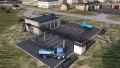 Water loading/unloading station


