
Water Supply
Water allows citizens to put out fires, and can be leveraged via dams and aqueducts to irrigate farmland, fill bathhouses, and construct fountains.
Wells
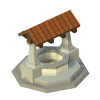
The well provides waterin a 5 tile radius from the center. This is vital for fire prevention and water supply in the early game.
| Icon | Building Name | Description | Cost | Size |
|---|---|---|---|---|
|
Well | Provides drinkable water and a small reduction in fire risk to nearby buildings. Don't fall in! |  5  5 |
 1x1 |
Fountains
| Icon | Building Name | Description | Cost | Happiness | Size |
|---|---|---|---|---|---|

|
Fountain | Provides access to drinkable water and all the benefits of a Well, but in a larger radius and with an added happiness bonus. Must be near a Water Tower to work. | 15 20 |
 +5 |
1x1
|

|
Large Fountain | Provides all the benefits of a Fountain, but in a larger area and with a bigger happiness bonus. Must be near a Water Tower to work. | 25 10 45 |
+7
|
2x2
|
Aqueducts
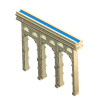
Aqueducts are not normal, they do not build on the grid and instead can be built anywhere. They collide with buildings excluding dams but can tunnel through the ground and go through, on, and over roads. The collision is only on the waterway, the supports do not care about collisions with anything. Aqueducts cannot be built upwards and must come from something and must end at something.
Water towers provide water in a 9 tile radius from the center and can provide to homes and other buildings, they cannot supply other water towers and must be connected via an aqueduct.
| Icon | Building Name | Description | Cost | Size |
|---|---|---|---|---|
|
Aqueduct | Aqueducts use gravity to move water over great distances. Use aqueducts to tap water from rivers and lakes and bring water to your city with Water Towers. | 5
|
1x1
|
| File:Icon water tower.png | Water Tower | Build near homes. Receives water from an Aqueduct and supplies it to nearby homes and buildings in a radius. Firefighters can use it as a source of water. | 15 5
|
1x1
|
Dams
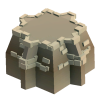
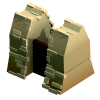
Dams are used to reroute water around your city, Dams block the water completely and Spillways only block it to a certain adjustable height. Spillways can only be created in the Dam planning mode.
| Icon | Building Name | Description | Cost | Size |
|---|---|---|---|---|
|
Dam | Use multiple blocks to create a sturdy stone barrier to resist water flow. Dam projects can be planned safely, without risk of flooding your city. | 7
|
1x1
|
|
Spillway | There is no description provided, this is a wiki description only. Allows for water flow over wooden blocks, you can change the height of the wooden blocks. | 10 7
|
1x1
|
Dam planning mode
Instead of building dams instantly you must plan them out beforehand and then they will be built overtime once confirmed. Dams connect horizontally and diagonally. The water simulation will reset after you add or remove something. Spillways can only be built over a straight stretch of dam, not diagonally.



